This article was produced by the FROM JAPAN editorial team with the assistance of AI.
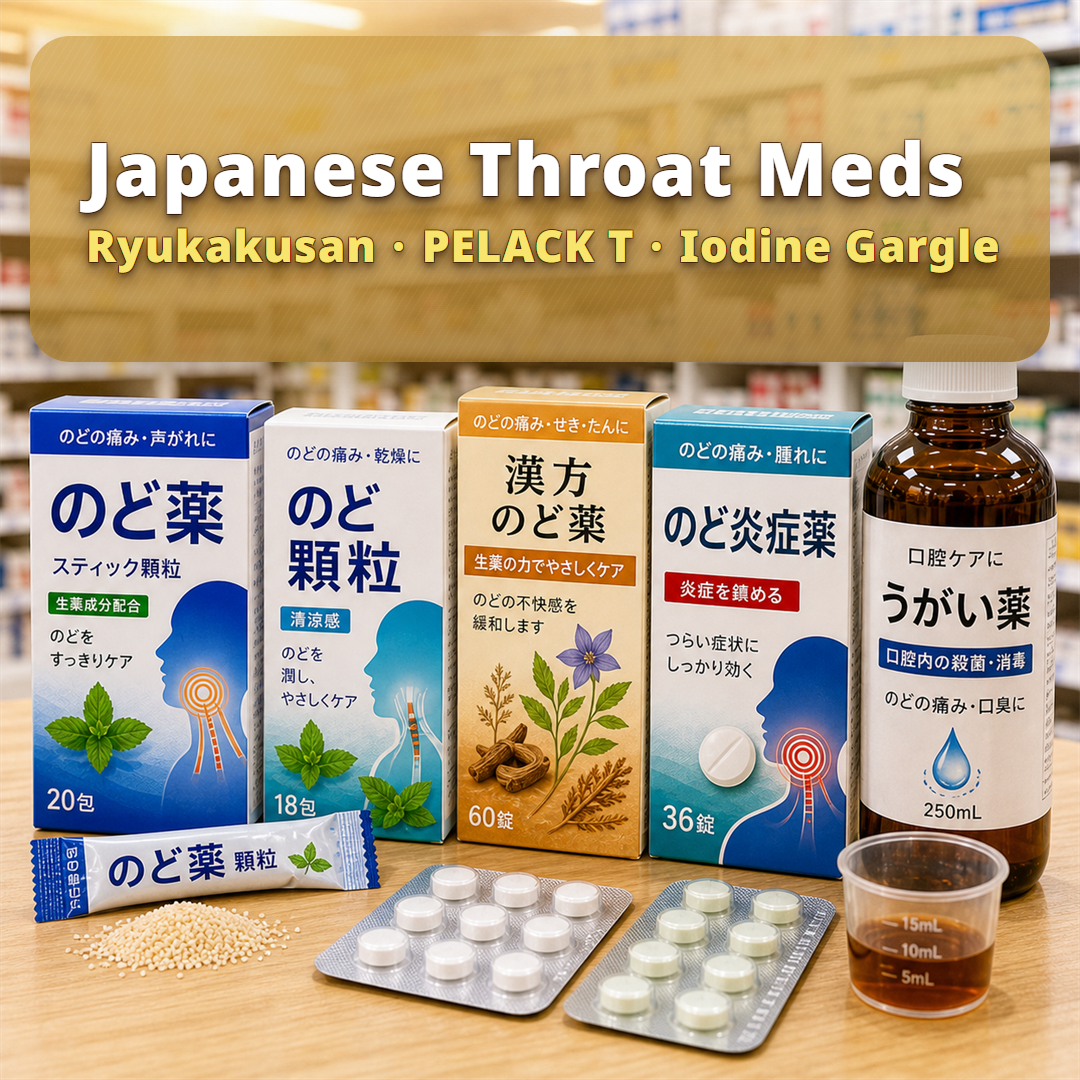
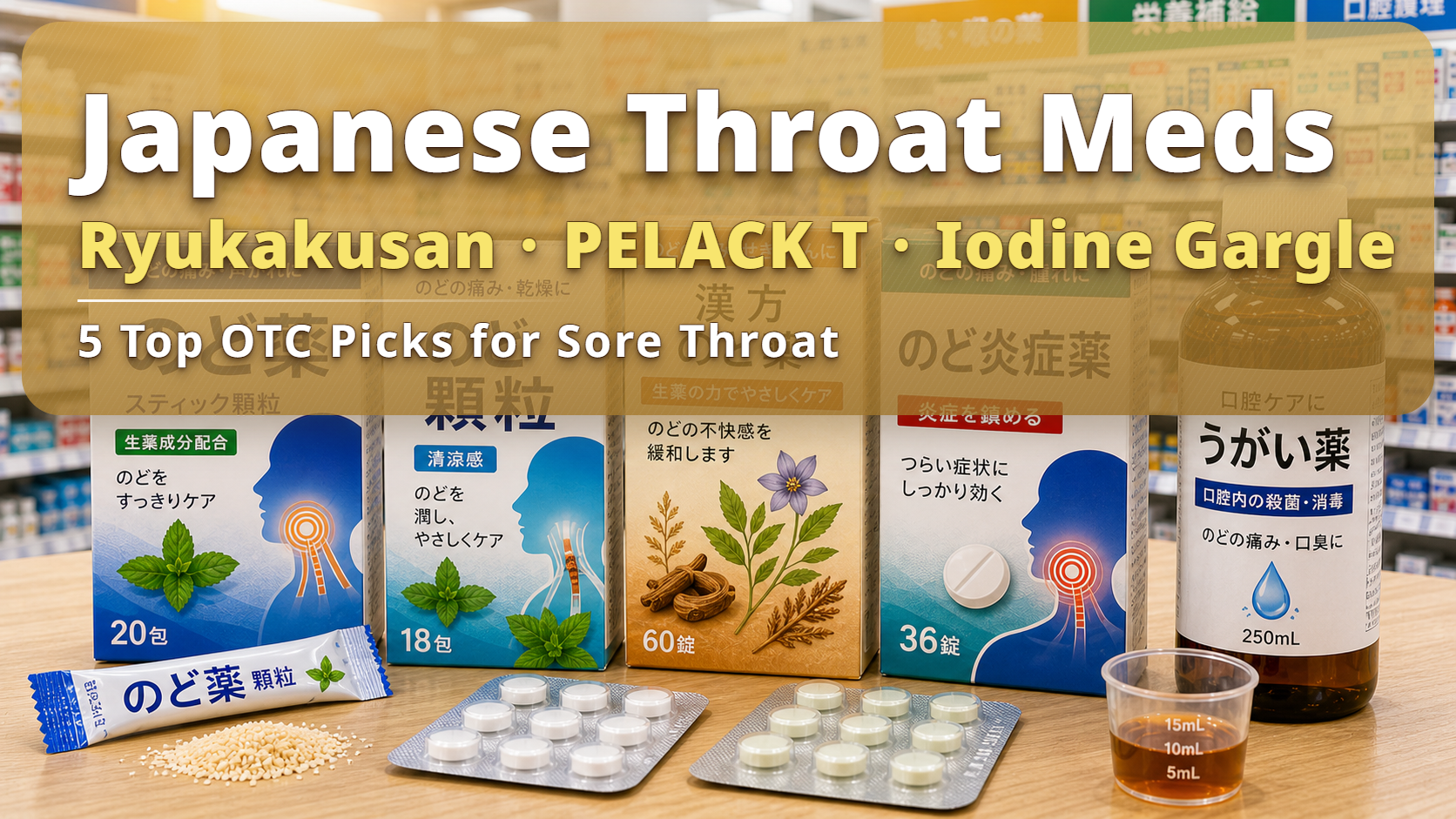
A dry, scratchy throat, a sore throat, throat inflammation, a hoarse voice — these tend to strike in dry air-conditioned summers, seasonal changes, a cold or after talking too much. Japanese drugstore throat remedies are a long-time traveler favorite: Ryukakusan soothes dryness and phlegm with herbal micro-powder, a tranexamic-acid oral medicine eases inflammation from within, the kampo Kikyo-to tackles tonsillitis and swelling, and an iodine gargle sanitizes the throat. Different symptoms need different forms and ingredients — pick the wrong type and it barely helps.
This guide sorts them by “symptom” + “form,” from the Ryukakusan classics through oral/kampo medicines to iodine gargle — 5 Japanese OTC throat picks worth buying, with their main ingredients and Japanese reference prices. Through FROM JAPAN, you can get the full Japanese lineup that is hard to find abroad, without flying to Japan.
In this article
- 5 Japanese throat medicines by symptom & form (Ryukakusan, PELACK T, Kikyo-to, iodine gargle)
- Main ingredients, form and Japanese reference price for each, at a glance
- “Medicated” vs “candy-grade” lozenges — the difference and how to choose
- Q&A — Ryukakusan effects/cautions, what to take for a sore throat
- FROM JAPAN proxy-buying in 3 steps, easy for first-timers
How to choose Japanese throat medicine? A 2026 symptom comparison
★ Key points
- First identify your symptom: dry/itchy, phlegm, hoarse? swollen, inflamed, tonsillitis? or early prevention / mouth cleaning?
- Dry/itchy, phlegm, hoarse → herbal coat-and-dissolve types like Ryukakusan (powder/granules).
- Swollen, inflamed → an oral anti-inflammatory (PELACK T’s non-drowsy tranexamic acid) or kampo (Kikyo-to).
- Early prevention / cleaning → an iodine gargle (Isodine), but note iodine allergy and thyroid conditions.
- Sore throat with high fever or difficulty swallowing/breathing → do not self-medicate; see a doctor.
Short on time? This overview table helps you quickly pinpoint the Japanese throat medicine you need:
| Category | Product | Item | Best for | PriceManufacturer’s suggested retail price (incl. tax). For open-price items, a market reference price (kakaku.com / Rakuten median) is shown. The actual price depends on FROM JAPAN’s exchange rate at order time. |
|---|---|---|---|---|
| Ryukakusan classics | 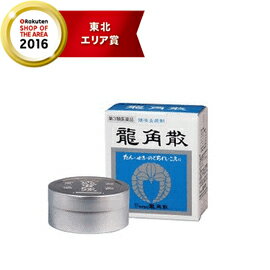 |
Ryukakusan Herbal Powder 90g
龍角散 90g
|
Dry, itchy throat |
¥2,523
|
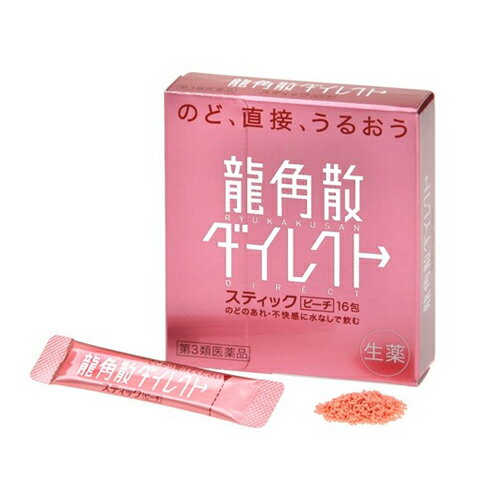 |
Ryukakusan Direct Stick (Peach) 16 sticks
龍角散ダイレクトスティックピーチ 16包
|
On-the-go relief |
¥528
|
|
| Oral / Kampo | 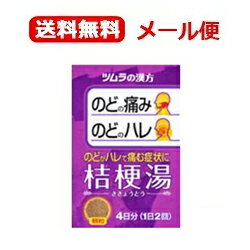 |
Tsumura Kikyo-to (Platycodon) Granules 8 packets
ツムラ漢方 桔梗湯エキス顆粒 8包
|
Tonsillitis & swelling |
¥940
|
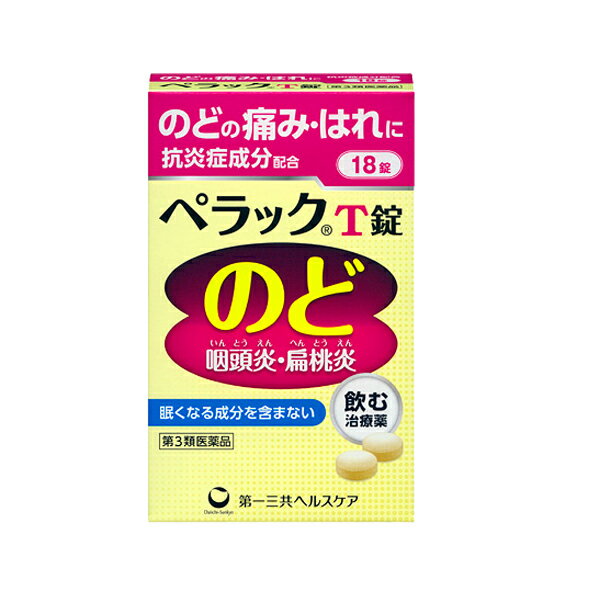 |
PELACK T Tablets 18
ペラックT錠 18錠
|
Inflammation & sore throat |
¥1,050
|
|
| Gargle | 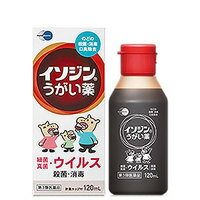 |
Isodine Gargle 120ml
イソジンうがい薬 120ml
|
Sanitizing & prevention |
¥990
|
Ryukakusan — 2 Japanese classics for a dry, itchy, hoarse throat
★ Key points
- Ryukakusan is Japan’s go-to for throat medicine — herbal micro-powder that coats the throat lining to ease dryness, phlegm and hoarseness
- For home, the classic powder tin (90g, for the whole family); for commuting, the stick granules (no water, melts in the mouth)
- Both don’t need water to take, handy for quick relief during meetings, travel or lots of talking
Both products below are Ryukakusan’s core line; the difference is form and use-case. The herbal micro-powder (platycodon, polygala, apricot kernel, licorice) coats the throat directly, suited for a dry, itchy throat, phlegm, or hoarseness from overuse. These are 3rd-class OTC medicines; follow the dosage on the package.
This article is general information, not medical advice. Use Japanese OTC medicines per the package instructions; if a sore throat persists or comes with a high fever, difficulty swallowing or breathing, see a doctor.
USD/GBP figures are reference conversions as of 2026-06-18; the actual price depends on FROM JAPAN’s exchange rate at order time.
Oral medicine & Kampo — tackling a sore throat from within (2 picks)
★ Key points
- When the throat is swollen and inflamed, an oral medicine that works from within often fits better than a lozenge
- PELACK T Tablets are the hidden gem — tranexamic acid eases inflammation from within, and they are non-drowsy, so you can take them while driving or working
- Prefer a natural approach? The classic Japanese kampo Kikyo-to targets tonsillitis and a swollen, sore throat — dissolve it slowly in the mouth
These 2 are the “oral treatment” route. PELACK T uses tranexamic acid to ease inflammation plus vitamins to support the mucous membrane — an oral sore-throat medicine that is hard to find outside Japan. Kikyo-to (licorice + platycodon) is a kampo choice for those of average or lower constitution with a swollen, sore throat and cough. Follow the age and dosage instructions, and see a doctor if symptoms persist.
This article is general information, not medical advice. Use Japanese OTC medicines per the package instructions; if a sore throat persists or comes with a high fever, difficulty swallowing or breathing, see a doctor.
USD/GBP figures are reference conversions as of 2026-06-18; the actual price depends on FROM JAPAN’s exchange rate at order time.
Gargle — iodine mouthwash to clean the throat at the source
★ Key points
- For early throat discomfort and prevention, an iodine gargle sanitizes and cleans at the source
- Isodine (povidone-iodine), diluted and used as a gargle, broadly sanitizes against bacteria, fungi and viruses, and also helps with bad breath
- Contains iodine — if you have an iodine allergy, a thyroid condition, or are pregnant, consult a doctor or pharmacist before use (see cautions below)
Isodine is a classic Japanese iodine sanitizing gargle (not a spray, so it can ship by courier). Diluted, it is used to sanitize the mouth and throat. It is a 3rd-class OTC medicine. Note: long-term or excessive use of iodine may affect thyroid function; do not use if you are allergic to iodine.
Throat lozenges: “medicated” vs “candy-grade” — what’s the difference?
When the throat is genuinely swollen and inflamed, candy-grade lozenges only soothe temporarily — pair them with an oral medicine (e.g. PELACK T or Kikyo-to) or an iodine gargle. To tell them apart, check whether the package is labeled “OTC medicine / quasi-drug.”
This article is general information, not medical advice. Use Japanese OTC medicines per the package instructions; if a sore throat persists or comes with a high fever, difficulty swallowing or breathing, see a doctor.
Isodine iodine gargle contains alcohol and cannot ship via Japan Post — choose courier/express during Charge 2.
USD/GBP figures are reference conversions as of 2026-06-18; the actual price depends on FROM JAPAN’s exchange rate at order time.
Sore-throat Q&A — choosing Japanese throat medicine
Here are the questions people ask most often, answered against the actual ingredients, forms and ordering details of these 5 products.
Q. Does Ryukakusan actually work? What is it for?
Ryukakusan is a 3rd-class OTC medicine (not just candy). Its main ingredients are herbal micro-powders — platycodon, polygala, apricot kernel and licorice — with stated effects of easing cough and phlegm, and the hoarseness, dryness, discomfort, pain and swelling caused by throat inflammation. The fine powder coats the throat lining directly, which feels especially helpful for a dry, scratchy throat or a voice worn out from talking. It is not an antibiotic, so bacterial throat infections still need a doctor.
Q. Ryukakusan cautions — who should avoid it?
Things to note: (1) it contains licorice (glycyrrhizic acid); long-term or high-dose use, or combining it with other licorice-containing kampo/medicines, carries a risk of pseudoaldosteronism (edema, raised blood pressure, low potassium), so people with high blood pressure, heart, or kidney disease, and older adults should consult a doctor or pharmacist first; (2) if you take other medicines, are pregnant or breastfeeding, or are being treated for a condition, ask before use; (3) follow the age and dosage on the package. See the package insert for full contraindications.
Q. Do throat lozenges help? How do “medicated” and “candy-grade” differ?
It depends which type. Medicated lozenges (OTC medicine / quasi-drug) contain active ingredients with stated effects and give supportive relief for a dry, uncomfortable throat; candy-grade lozenges mainly provide a soothing feel via saliva and a cooling sensation, with no therapeutic claim. When the throat is already clearly swollen and inflamed, candy-grade lozenges only soothe temporarily — pair them with an oral medicine (PELACK T, Kikyo-to) or an iodine gargle. To tell them apart, check the package for “OTC medicine / quasi-drug.”
Q. Sore throat vs. throat inflammation — which medicine clears it faster?
First sort by symptom type: dry/itchy, phlegm, hoarseness → herbal coat-and-dissolve types like Ryukakusan; clear swelling, inflammation, tonsillitis → an oral anti-inflammatory (PELACK T’s tranexamic acid) or kampo (Kikyo-to); early prevention / mouth cleaning → an iodine gargle (Isodine). There is no one-size-fits-all cure — matching the medicine to the symptom is what makes it clear up faster. If you have a high fever, difficulty swallowing, severe one-sided swelling, or symptoms lasting more than a few days, see a doctor (it may be bacterial and need antibiotics).
Q. Kampo Kikyo-to vs. Western PELACK T — what’s the difference?
Kikyo-to is a kampo (licorice + platycodon) positioned for “average-or-lower constitution, swollen sore throat with cough” — dissolve it slowly as it’s a more natural approach. PELACK T is a Western oral medicine using tranexamic acid for inflammation plus vitamins B2/B6/C to support the mucous membrane, and it is non-drowsy, suitable for daytime work or driving. If you want a non-drowsy option that targets swelling and inflammation from within → PELACK T; prefer kampo, with a cough → Kikyo-to.
Q. These Japanese throat medicines are hard to buy abroad — what should I know about ordering via FROM JAPAN?
Japanese versions of Ryukakusan powder, Direct Stick granules, PELACK T and the like are often hard to find in full abroad; via FROM JAPAN you can order them directly from Japan and combine shipping. The order price includes the Japanese retail price plus a service fee and international shipping, so it is not necessarily cheaper than local options — the value is in “getting the full Japanese lineup” and “buying it all at once.” Also, Isodine iodine gargle contains alcohol and cannot ship via Japan Post, so choose courier/express during Charge 2.
Q. For a COVID/cold sore throat, which one should I choose?
For early dry/itchy throat or phlegm, a Ryukakusan-type can soothe; for clear swelling and inflammation, PELACK T (non-drowsy tranexamic acid) or Kikyo-to; for mouth cleaning, an Isodine gargle. These relieve symptoms and do not treat the virus itself; if you have a high fever, difficulty breathing, worsening symptoms or a positive test, follow your local health guidance and see a doctor.
Q. Ryukakusan powder vs. granules vs. lozenges — how do I choose?
Powder tin (90g) = home staple, whole family, good value; Direct Stick granules = portable, no water, melts in the mouth; lozenges = mainly a quick soothing feel. For “active ingredients acting on the throat,” choose the powder or granules (3rd-class OTC medicine); for an on-the-go throat soother, a lozenge is fine.
Q. Can I use the iodine gargle (Isodine) every day?
Long-term continuous use is not recommended. Isodine contains iodine, and excessive or prolonged use may affect thyroid function; do not use it if allergic to iodine, and consult a doctor or pharmacist first if you have a thyroid condition or are pregnant or breastfeeding. Use it short-term for early throat discomfort or prevention, spit it out after gargling, and dilute as directed.
Safety notes — using OTC throat medicine responsibly
The products here are Japanese OTC medicines (2nd- and 3rd-class). This article is general information and is not a substitute for a doctor’s diagnosis. Please check the following before buying and using them.
1. When to see a doctor instead of self-medicating
- A sore throat with high fever, difficulty swallowing or breathing, or drooling because you cannot swallow (possible peritonsillar abscess or epiglottitis — seek care immediately)
- Severe one-sided swelling, neck swelling, or a voice that stays hoarse for more than 2 weeks
- No improvement after a few days of OTC use, or repeated recurrence
- Sore throat in young children, older adults or people with chronic illness — get it assessed early
2. Age limits, pregnancy and breastfeeding
Age limits differ by product: Ryukakusan Direct Stick granules = not for children under 3, Kikyo-to = not for children under 2, PELACK T = ages 7+ (separate dose under 15). If you are pregnant or breastfeeding, consult a doctor or pharmacist before using any medicine. Always follow the age and dosage on the package.
3. Licorice caution (Ryukakusan & Kikyo-to)
Both Ryukakusan and Kikyo-to contain licorice (glycyrrhizic acid). Long-term or high-dose use, or combining them with other licorice-containing kampo or medicines, may cause pseudoaldosteronism (edema, raised blood pressure, low potassium, muscle weakness). People with high blood pressure, heart or kidney disease, or older adults should consult a doctor or pharmacist first and avoid stacking multiple licorice products.
4. Iodine gargle caution (Isodine)
Isodine contains povidone-iodine. Do not use it if you are allergic to iodine; people with a thyroid condition, or who are pregnant or breastfeeding, should consult a doctor or pharmacist first (excessive or long-term use may affect thyroid function). Dilute as directed, spit it out after gargling (do not swallow), and avoid prolonged continuous use.
5. General cautions
- Throat medicines (lozenge, oral, kampo, gargle) are not antibiotics; a doctor must decide whether bacterial pharyngitis or tonsillitis needs antibiotics
- If you take other medicines or are being treated for a condition, ask a doctor or pharmacist before combining them
- Stop use and seek care if you develop a rash, itching, swelling or other allergic symptoms
- Store in a cool place away from children; use within the date on the package
Compiled from public OTC-medicine classification information from Japan’s Ministry of Health, Labour and Welfare. For actual dosage and contraindications, follow the package and insert.
Buying Japanese throat medicine — FROM JAPAN makes it easy
Want Japanese throat medicine and lozenges from overseas? FROM JAPAN offers a full proxy-buying service — just 3 steps, no flight to Japan required.
- Genuine guaranteed — FROM JAPAN buys only from legitimate Japanese pharmacies, drugstores and retailers, never parallel imports or fakes
- Japan warehouse check — items are visually checked on arrival at the Japan warehouse, with any issue reported
- English support — an English interface throughout; you can ask customer service about medicine orders in English
Go to the FROM JAPAN throat-medicine section
FAQ
Disclaimer
This article is general information and not medical advice. Use Japanese OTC medicines per the package and insert; if a sore throat comes with high fever, difficulty swallowing or breathing, or persists or worsens, see a doctor. If you are an infant’s caregiver, pregnant or breastfeeding, or have an existing condition (high blood pressure, thyroid disorder, iodine allergy, etc.), consult a doctor or pharmacist before use. Prices and specs follow the FROM JAPAN item page and may change with stock or local availability; Japanese reference prices are market references, and the order price including service fee and international shipping is not necessarily lower than local prices.
Import rules differ by country — please confirm what medicines and quantities your country allows before ordering. FROM JAPAN ships 2nd/3rd-class medicines via Japan Post only, to the listed countries/regions; “able to ship” does not guarantee “able to clear customs,” which is the buyer’s responsibility. Alcohol-containing items like Isodine cannot ship via Japan Post — choose a courier/express shipping method instead.. USD/GBP figures are reference conversions as of 2026-06-18; the actual price depends on the exchange rate at order time.